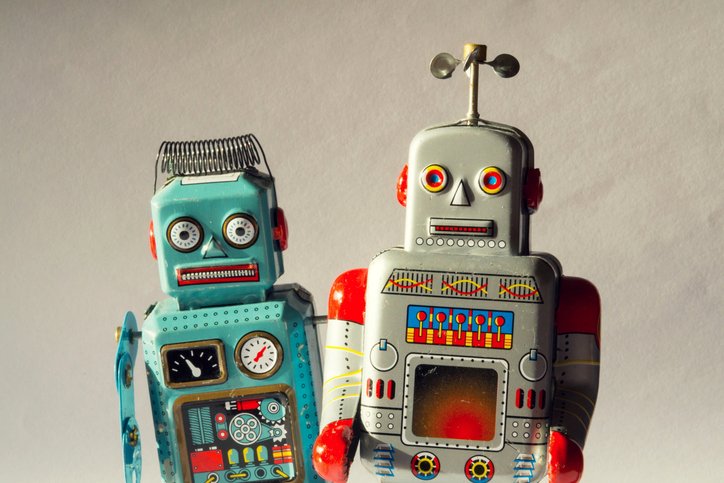
As it turned out, it was not Karel Čapek, but his older brother, the artist Josef Čapek, who invented the word «robot» for the context of the play R.U.R. (from the Czech Rossumovi Univerzální Roboti, Rossum's Universal Robots). Translated from Czech, «robota» means «hard work», «hard labor», «barshchina»). The idea for the script about «hard-working robots» appeared to Karel Čapek out of the blue, and while it was still glowing, the author went to his older brother Josef, whom he found at his easel 🎨
— But I don't know what to call these artificial workers, said the writer. I want to call them laboratories, but this word seems too artificial to me.
— Then call them robots, the artist said...
And that's how it was. That's how the word «robot» was born, which we often become under the pressure of life's affairs and circumstances... 🦾
Unlike many science fiction writers who used the word "robot" to describe humanoid inanimate mechanisms, Karel Čapek, together with his brother, called robots not machines but living flesh-and-blood people created in a special factory. Then the main character Domin's dreams of freeing people from humiliating labor and creating an environment of boundless prosperity came true, because the world of plenty already reigns on Earth, based on the 1920 play, with goods and food being produced by robots in excess of the norm.
It is interesting that each of the main characters in R.U.R. represents the dominant national Euro-Atlantic civilization of the time. For example, Harry Domine, the CEO, is an American, representing the United States of America with its top managers, industrialists, and scientists; Dr. Gall is a Frenchman, representing Gaul, i.e. France; Fabri is an Italian, representing Italy; Hallemeyer is a German, representing Germany; Bussman is a Jew, representing Britain. In addition, all the names are not random, but have a certain semantic load. Rossum – from the Czech for «reason, rationalism»; Dominus – from the Latin for «Lord, God»; Fabry – from the Latin for «faber» (craft, technique); Busman – from the English for «business» (trade).
We are pleased that today's robots help people not only free themselves from labor enslavement but also maintain their personal life balance. The benefits of AI-powered robots in the economy and the defense industry are crucial. We create them at Botera for a fundamental needs – safety, happiness, and well-being 🏄